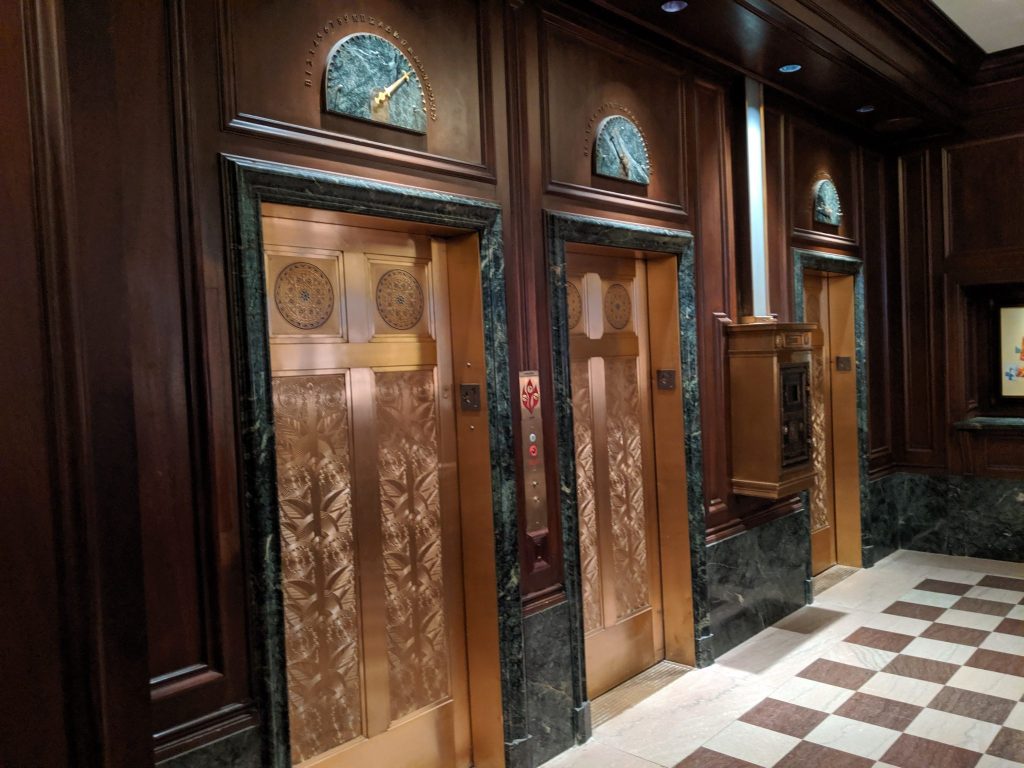
We’ve all seen the signs – elevator out of order – as we pass through our days. For some, it’s a vague inconvenience. For others, it’s somewhere between a major set-back in their travels and a plan-derailing ending to whatever they were hoping to do with their day.
Of course, that’s just if there’s a sign there warning you. That’s just if the button won’t work, or the doors don’t open. What about when you end up trapped in the elevator? What about when the elevator is so out of order that there is no way to bring it back down to the ground? No way to get you out except to be moved out of your wheelchair and fireman-handled out whatever opening can be created in the mechanical infrastructure?
What do we call the feeling of unsafety this produces in that wheelchair user? What do we call the feeling of unsafety it produces in other wheelchair users who hear of the experience? Is it “unfortunate”? Is it “to be expected”? Or can we acknowledge that it creates a palpable feeling of concern and wariness – a desire to avoid the situation – a tension that just adds to the emotional load of living daily life – or even a trauma response? What would we call it then?
I have no interest in adding to the oppression olympics. No desire to try to draw equivalents between what different minoritized individuals and groups experience. The term hate crime has a particular meaning and understanding, and is tied directly to active, usually premeditated acts of violence enacted by an individual or group against someone because of their embodied treats – race, disability, age, gender, etc.
Elevators aren’t individuals or groups. They aren’t sentient. They can’t premeditate their actions (at least, not yet). Elevators are simply machines. Parts fail, things break down – it’s nothing personal. It’s to be expected, surely?
Perhaps. Perhaps not.
Perhaps it’s just unavoidable. Perhaps no matter how well you tune and oil and grease the parts – perhaps no matter how much money and effort and energy you put into it these things will continue to happen.
If that’s the case, we need a way to acknowledge the emotional toil this takes on those of us with disabilities. Even second or third hand, hearing about someone’s experience of being trapped in an elevator rattles the mind and the body – it makes me more wary of getting in an elevator – more aware of where my phone is – more concerned about making sure that someone knows I’m getting in and will raise the alarm if I don’t end up at my destination in time.
But perhaps – just perhaps – if we collectively spent time with the pain and discomfort – even the trauma – the added mental load of being dependent on machines that wheelchair and other mobility users have no control over the maintenance schedule of – we might start to wonder what message we are sending when elevator maintenance is allowed to lapse or when elevators are pushed past their usable life span due to financial restraints.
What are we saying about the value of having those with disabilities present in the full life of our communities?
What are we saying about the role we have to play collectively in shifting our expectations and priorities to be able to share the load of ensuring that all bodies deserve a space of safe presence in our schools and offices, theatres and community centres?
What are we saying about the trauma we are inflicting on those dependent on these devices?
What are we saying?
I don’t know what we call an elevator malfunction. But I think we need a name for it that recognizes that it goes beyond simply a mechanical hiccup. Because that elevator may be what stands between someone and a crucial exam start time – between them and seeing a loved one at the hospital – between them and a job interview – or simply between them and their bed at the end of a long and painful day of being out in the world. I think we need a name for the impersonal sucker-punch feeling that comes even from finding out that the elevator you depend on every day gave out last week and I or a friend got stuck in it.
I think it needs a name.

 Powered by Love
Leave a comment