It’s hard to make changes if you don’t understand where you are now, or where you want to go.
Many people out there are pretty clear on their emotions – what they feel, why, and what strategies work best for them to help resolve challenges that may come up along the way.
But some of us didn’t have the chance to learn these lessons as children.
And some of us didn’t have to think about it carefully for ourselves, but now find ourselves raising children or living with partners whose emotions simply don’t seem to make any sense.
To compound the problem, some of us were actually taught that emotions were bad – that they lied to us, that they couldn’t be trusted, that they were used as tools of manipulation or that it was our responsible to control our emotions and the emotions of others to prevent bad things from happening.
These kinds of lessons can leave us ill-equipped to deal with the very real, sometimes overpowering emotions that we face in ourselves and others on a regular basis.
But what if emotions were there to tell us something? What if we could tune in to our emotions and in turn tune up our ability to live life in the best way possible?
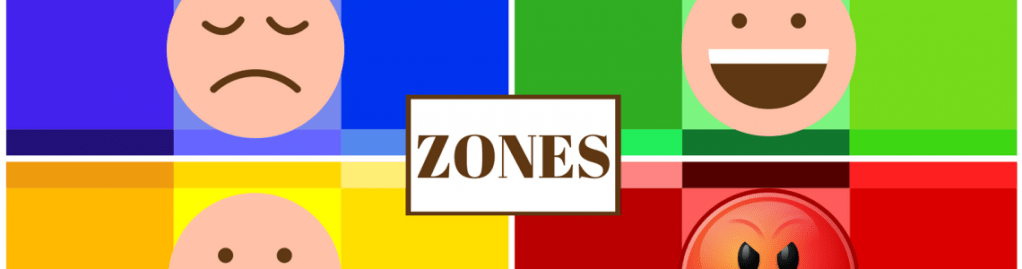
Educator Leah Kuypers developed a tool called the Zones of Regulation® which she uses in the classroom to teach kids healthy ways of understanding and interacting with their emotions. It’s a super simple tool that we can use and explore in all sorts of ways to develop more integrated ways of living, no matter how old we are.
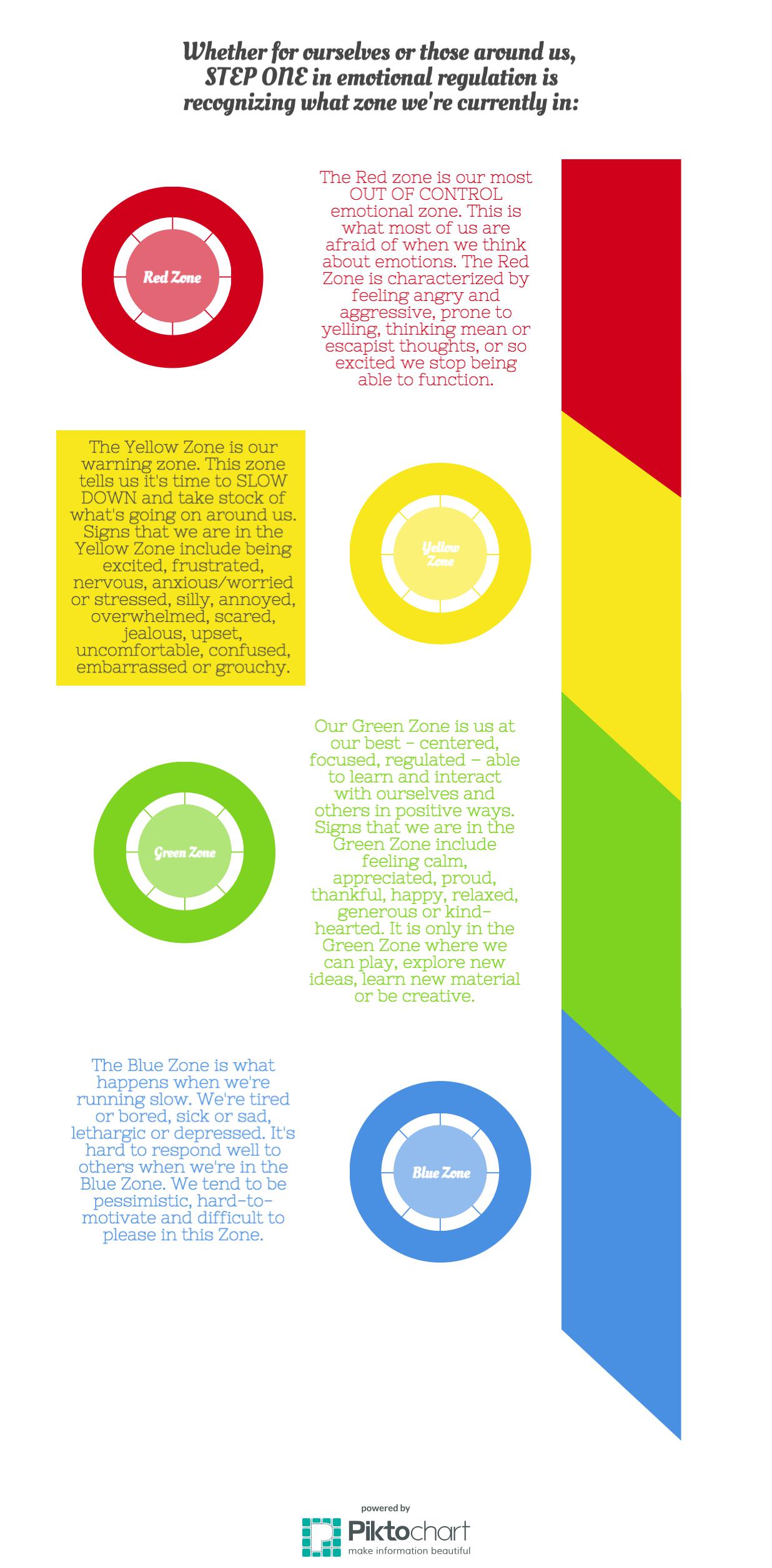
It’s not bad for us to be in any of these Zones. But if we apply our compassionate curiosity to the situation, then each and every Zone tells us something about where we’re at emotionally, physically, relationally or even spiritually.
That doesn’t mean that when our emotions tell us the world is going to end we have to agree with them. But if our emotions are telling us that the world is going to end, maybe there’s a reason for us to feel that way.
Maybe we feel that way because we’re overwhelmed – because we’re trying to do too much in too little time with too few resources.
And if we knew that we felt that way because we were overwhelmed, then we could take steps to change what was going on in our lives.
So what if, instead of fighting or ignoring our emotions, we learned to listen and respond – not to the sense of anger or panic or impending doom, but to the reason for that feeling, so that we could live the life we were designed to live in a healthier, more integrated fashion?

 Powered by Love