
Coaching
-
Shifting my Unmasking from Revealing to Unearthing

When I took the Values-Based Integration training, I hesitated to engage with the concept of unmasking again. I had already tried unmasking, and it went really badly. The only reason I showed up was because I had read about the process of finding values within your stories, which resonated with me in a way that… Continue reading
-
The Magic Of Discovering Our Unique Values

I wish I could collect values. In my coaching practice, I have the pleasure of hearing my clients’ Fully Alive stories and guiding them through the process of discovering their unique values. Unlike the lists of “common value words” that get handed out in some therapy offices, clients discover values that are so uniquely them… Continue reading
-
Gentle Unmasking: Transformations Don’t Have To Be Painful
I used to be the “tough love” therapist. I believed confronting people with the “truth” would be an emotional jolt that could facilitate change. And sometimes it worked. Whenever I met with clients who were intellectualisers like me, being presented with a new “theory” or idea offered a “high”. New and novel perspectives can feel… Continue reading
-
Stories Before Scars: How Talking About My Fully Alive Moments Shifted My Embodied Experience Of Joy

As a survivor of attachment trauma, the hardest part of recovery has been letting joy in. Joy doesn’t feel safe. What if I let down my guard and another terrible, traumatizing thing happens? I’ve had enough of that. I don’t think I can take more. Joy feels like a trap. When I started the Values… Continue reading
-
Learning My Value(s)

Hi, I’m Seren. I’m an Autism and ADHD coach who nearly quit coaching before I even started. While I believe a core strength I have as a coach is the compassionate recognition of my own struggles, I was struggling. How did I have any right to coach others when my own life was disintegrating? I… Continue reading
-
Discovering My Values Meant Discovering Me
Introduction to Guest Blogger Erin Watson The sign of a great life is having tried it all! Well, I tried it all – all the therapy modalities, that is. I tried the trauma reprocessing, I tried group programs, I tried CBT, DBT, EFT and even hypnosis. I visited energy healers and shamans. I practiced meditation,… Continue reading
-
Fear and Love

There is a concept in psychology called ‘primary emotions’. These are seen as the emotions out of which all other emotions flow. Theorists, however, disagree wildly on what these different primary emotions might be. The following chart summarizes a wide range of these theories: Theorist Basic Emotions Plutchik Acceptance, anger, anticipation, disgust, joy, fear, sadness,… Continue reading
-
Grounded Not Bounded

One of the realities of developing a condition that involves a significant amount of fatigue is that you end up hearing an awful lot about the need to set boundaries. And as a parent of kids with autism, and a wife to a husband with autism – as a person who wants and even needs… Continue reading
-
Tools in Your Toolbox – Know Your Zones
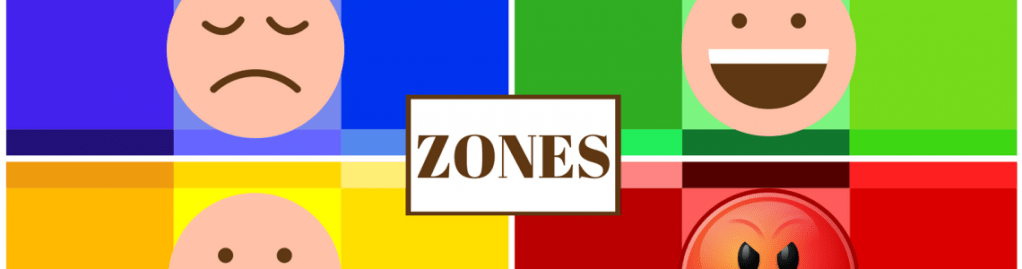
It’s hard to make changes if you don’t understand where you are now, or where you want to go. Many people out there are pretty clear on their emotions – what they feel, why, and what strategies work best for them to help resolve challenges that may come up along the way. But some of… Continue reading
-
Tools in your Toolbox – What Makes You Come Alive?

One of the first questions that we need to ask with our compassionate curiosity is what makes you come alive? The reason is simple – all of us are exposed to lots of different voices, from lots of different directions. Everyone wants to tell us how to live, how to think, how to make decisions, what… Continue reading
About the program
In 2017 I was newly self-diagnosed with atypical autism, struggling with burnout, and striking out when it came to therapists who could address the issues I was facing. At the same time, I was building skills around life coaching, shame reduction, and trauma-informed therapy for work. Gradually I realized that what I needed – an embodied, autonomous, agency-driven coaching approach to unmasking – was not something I was going to find “out there”, but something I was going to need to create if I wanted to recover my life. This was the moment the Values Based Integration Process was born.
Having developed the program for myself – and having seen the incredible results it brought in my own life – I began to use it with coaching clients. The results were out of this world!
After conversations with Dr. Devon Price, the technique was featured in his book Unmasking Autism. With it, came interest in the technique and the decision was made to begin training coaches and therapists to help make this toolkit more readily available.
 Powered by Love